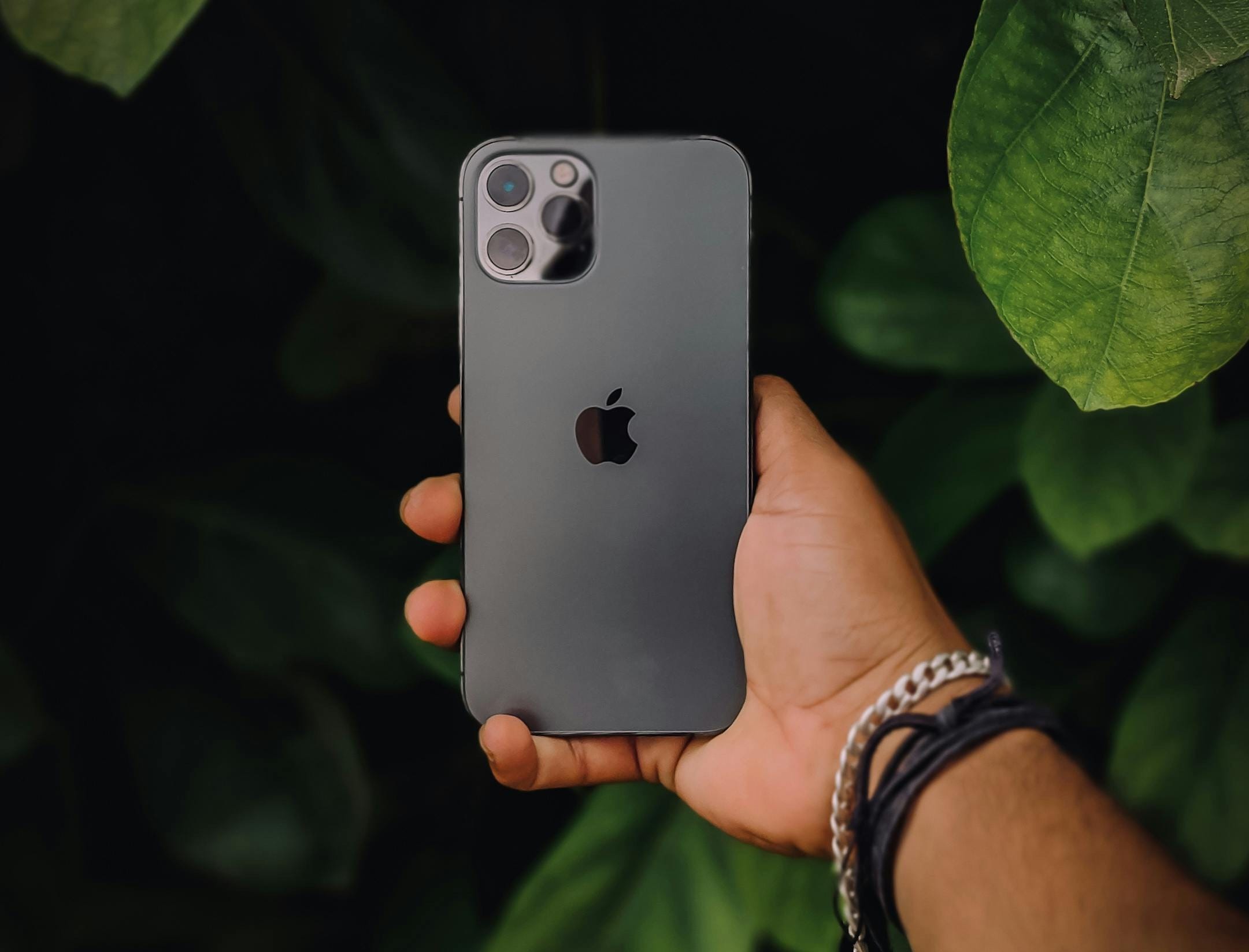
People still talk about breakthrough products as if they arrive through invention in the narrow sense.
A new technology appears. A genius sees the future. The market follows.
It is a clean story. It is also usually wrong.
The iPhone is one of the best examples of why.
It did not invent communication, photography, internet access, mobile software, or the desire to carry capability beyond the desk. Those already existed in fragments. What Apple did was more consequential. It assembled those fragments into a product and business model that made a familiar set of aspirations easier to satisfy across the day.
That is the real lesson.
The iPhone did not create a new human need. It made an old one continuous. It collapsed enough friction that a behavior once partial and episodic became normal.
That distinction matters because it changes how we should think about the future.
The wrong question is: What entirely new technology will define the next era?
The better question is: Which old aspiration becomes newly easy to perform because several constraints collapse at once?
That is where large markets usually come from.
Most forecasts miss this because they overweight technological novelty and underweight the stability of human jobs.
People still want what they have long wanted. To know what is going on. To respond in time. To reduce uncertainty. To remember less and forget less. To protect health. To coordinate work and life. To move through the world with less friction. To feel capable, connected, and in control.
Those aspirations do not change as fast as technology does.
What changes is the cost of fulfilling them. What changes is the amount of effort, switching, delay, and exposure people must tolerate to make progress.
This is why the most important products often do not start with a new desire. They start when an old desire becomes easier to satisfy across more situations, with less effort, less interruption, and less awkwardness.
The Walkman did not create the desire to carry music beyond the home. It made private listening portable enough to become routine.
The iPhone did not create the desire to compute, communicate, and coordinate on the move. It made those jobs coherent enough to become continuous.
That suggests a more useful rule for thinking about the future: breakthrough products appear when an old aspiration becomes portable, persistent, delegated, and socially normal.
Once you see the iPhone this way, the future becomes easier to think about.
The next iPhone-like breakthrough will not mainly be a better object. It will be a better answer to a job people already care about. More precisely, it will remove more of the user’s orchestration burden.
That is the deeper continuity between the Walkman, the iPhone, and whatever comes next.
The Walkman absorbed the burden of bringing music into motion. The iPhone absorbed part of the burden of carrying and coordinating a fragmented digital kit. The next wave will absorb more of the burden of coordination itself.
That is the right lens for the next 5, 10, 20, and 50 years.
The real question is not what the next device will be. The real question is this:
What part of life stops requiring the user to act as the full-time systems integrator?
5 years: from access device to personal agent
The most plausible short-term shift is simple.
The smartphone era moves from access to agency.
For the past fifteen years, the phone has mostly been an access machine. It gives you information, communication, media, maps, software, and payments. But it still leaves the user doing most of the work. You have to remember the task, open the app, navigate the flow, compare the options, enter the information, and manage the sequence.
That is the exposed friction now.
The next step is not that the phone becomes dramatically more powerful in a technical sense. It is that it becomes more willing and more able to carry part of the coordination burden.
The stable aspiration here is straightforward:
Help me get through daily life with less mental overhead.
That job already exists everywhere. People want less remembering, less app-switching, less repeated search, less administrative effort, fewer dropped balls, and less time spent translating intentions into interfaces.
So the next five-year breakthrough likely looks like a personal agent layer across phone, earbuds, watch, perhaps glasses, and cloud intelligence.
Not one more app. Not one more assistant that answers questions. A system that notices context, remembers state, handles routine sequences, and reduces the amount of explicit orchestration required from the user.
The job shifts from:
Give me access to digital tools
to:
Help me make progress without having to manually manage every step.
That is a larger market than “better smartphone.” It is a market for reduced cognitive load.
The functional gain is obvious. Less coordination. Less interruption. Less repeated effort.
The emotional gain may matter more. Less fear of forgetting. Less low-grade overload. Less feeling that life is now one endless stack of interfaces.
The social gain is subtle but real. It helps people remain responsive, prepared, and competent without visibly spending their day managing systems.
In this horizon, the phone does not disappear. It changes role. It becomes one node inside a larger agentic assemblage.
10 years: from screen interaction to situational computing
Ten years out, the bigger shift is likely to be the reduced primacy of the screen.
Not the end of the screen. The end of the screen as the default place where all capability must be accessed.
The smartphone made computing portable, but it still forces the user to step out of the flow of life and into a screen-shaped ritual. Look down. Unlock. Find the app. Enter the intent. Return to the world.
That was a brilliant compromise. It is still a compromise.
The next horizon will likely be defined by situational computing. Intelligence, interface, and context merge so that help becomes available within the moment rather than outside it.
The stable aspiration here is:
Help me act in the world without constantly breaking flow to manage the digital layer.
That is a better framing than “smart glasses” or “spatial computing,” because it starts with the user’s burden rather than the hardware narrative.
The assemblage here will likely combine lightweight wearables, voice, ambient audio, visual sensing, spatial interface, and an agent layer that understands context well enough to reduce the need for explicit commands.
The product is not mainly a device. The product is a new coordination logic in which software becomes less session-based and more situational.
The functional job is to reduce interruption and tool friction.
The emotional job is to reduce fatigue from constant switching and from the sense that one is always partly absent from the immediate environment.
The social job is to stay capable and informed without signaling permanent disengagement from the people or place around you.
The important change here is not cosmetic. It changes the unit of interaction.
We move from app sessions to contextual assistance.
The smartphone pulled computing out of the desk. The next layer may pull it partly out of the screen.
20 years: from tool stack to life coordination infrastructure
Twenty years out, the shift gets larger.
The next important assemblage may not look like consumer electronics at all. It may look more like life coordination infrastructure.
By then, the core problem is unlikely to be lack of digital capability. It will be the rising complexity of daily life across health, work, care, logistics, money, mobility, and domestic systems. People already have no shortage of tools. What they lack is coherent support across domains that remain fragmented.
The stable aspiration here is:
Help me maintain capability and control as life becomes too complex to manage comfortably through separate tools.
That is a large job, but it is not vague.
Help me stay healthy before I become a patient. Help me coordinate obligations without drowning in administration. Help me extend competence without having to become an expert in each domain. Help me remain autonomous as systems around me grow denser and less legible.
The winning assemblage here may combine sensing, predictive assistance, logistics, scheduling, payments, preventive health, household systems, mobility, and narrow forms of automated execution.
The functional gain is that cross-domain coordination gets easier.
The emotional gain is relief from carrying invisible system-management burden all day.
The social gain is dignity. People can remain competent, caring, and independent longer without relying on heroic effort.
This is where many forecasts go wrong. They imagine a spectacular new object. The more consequential breakthrough may be quieter. It may be the first system that makes ordinary life less administratively punishing.
The iPhone gave you a personal digital environment. The twenty-year equivalent may give you a personal coordination environment.
50 years: from personal systems to ambient institutional support
Fifty years out, prediction becomes less useful if it focuses on devices. The better move is to follow the logic of the job.
At that horizon, the defining assemblages may no longer be experienced as “products” in the way we use the term today. They may be experienced as ambient support layers woven into institutions, environments, and biological management.
That sounds abstract, so it helps to stay precise.
The stable aspiration here is not new:
Help me sustain agency, health, identity, and participation in a world whose complexity exceeds unaided human coordination.
That is the long-run job.
If the 5-year horizon is about delegated tasks, the 10-year horizon about contextual assistance, and the 20-year horizon about cross-domain life coordination, then the 50-year horizon is about something broader. It is about the merging of personal support with civic, biological, and institutional systems.
The future assemblage here may include continuous health monitoring and intervention, adaptive environments, trust and identity layers, mobility systems, personalized education, care coordination, resource management, and governance protocols that help people operate inside systems too complex to navigate manually.
The product, if we still call it that, is not a gadget. It is an ambient contract between person and system.
The functional job is no longer just task execution. It is long-horizon maintenance of capability.
The emotional job is not only convenience or reduced stress. It is security without total dependence, support without constant visibility, and agency without isolation.
The social job may become the most important one. Help me remain a participating person, not just a managed data point, inside increasingly automated systems.
This is where the real tension will sit.
The future fifty years from now will not mainly be a design question. It will be a question of power, trust, permission, governance, and what kind of dependency people are willing to accept in exchange for support.
That is why the fifty-year horizon matters. It reveals that the endgame of these assemblages is not more features. It is the redesign of how people relate to complexity itself.
The pattern across all four horizons
Across 5, 10, 20, and 50 years, the pattern stays consistent.
In the near term, tools become agents.
Then, agents become situational.
Then, situational systems become cross-domain life infrastructure.
Eventually, life infrastructure becomes ambient and institutional.
At each stage, the same thing is happening.
A familiar aspiration stays in place. Several constraints collapse. A new execution layer appears. The user stops carrying as much orchestration burden.
That is the deeper thread.
The next iPhone-like breakthrough will not mainly win by having the most impressive technology. It will win by making an old job newly manageable at a scale and continuity that older products could not.
What this means for founders and strategy teams
This view has an uncomfortable implication.
Most firms still organize search around categories, components, and features. They ask how to improve the phone, the app, the platform, the wearable, the health product, or the home product.
That is usually too narrow.
The more useful search question is:
Which job still spills across too many categories, forcing the user to do the integration work?
That is where the next large markets hide.
Not in unprecedented desire, but in under-integrated aspiration.
This changes what product teams should observe. They should look less at what people say they want next, and more at where they still patch together bad solutions, repeat the same coordination steps, carry invisible mental load, or accept unnecessary interruption as normal.
That is where an assemblage can matter.
The iPhone did not win because it invented a desire. It won because it became the first convincing arrangement of technologies, interface, and business model around a job people already cared about.
The next breakthroughs will do the same.
Not by inventing entirely new people. By giving existing people a better way to cope with a life that keeps getting harder to coordinate.
The next iPhone will not look like an iPhone.
It will look like a system that removes a burden most people have learned to treat as normal.