Introduction
I kept running into the same boundary when working with innovation teams. Conversations moved quickly to solutions, validation, and execution, only to move back and forth again and again. The harder questions stayed unanswered: When is an idea worth real commitment? When does learning become expensive? And who is actually accountable for decisions under uncertainty?
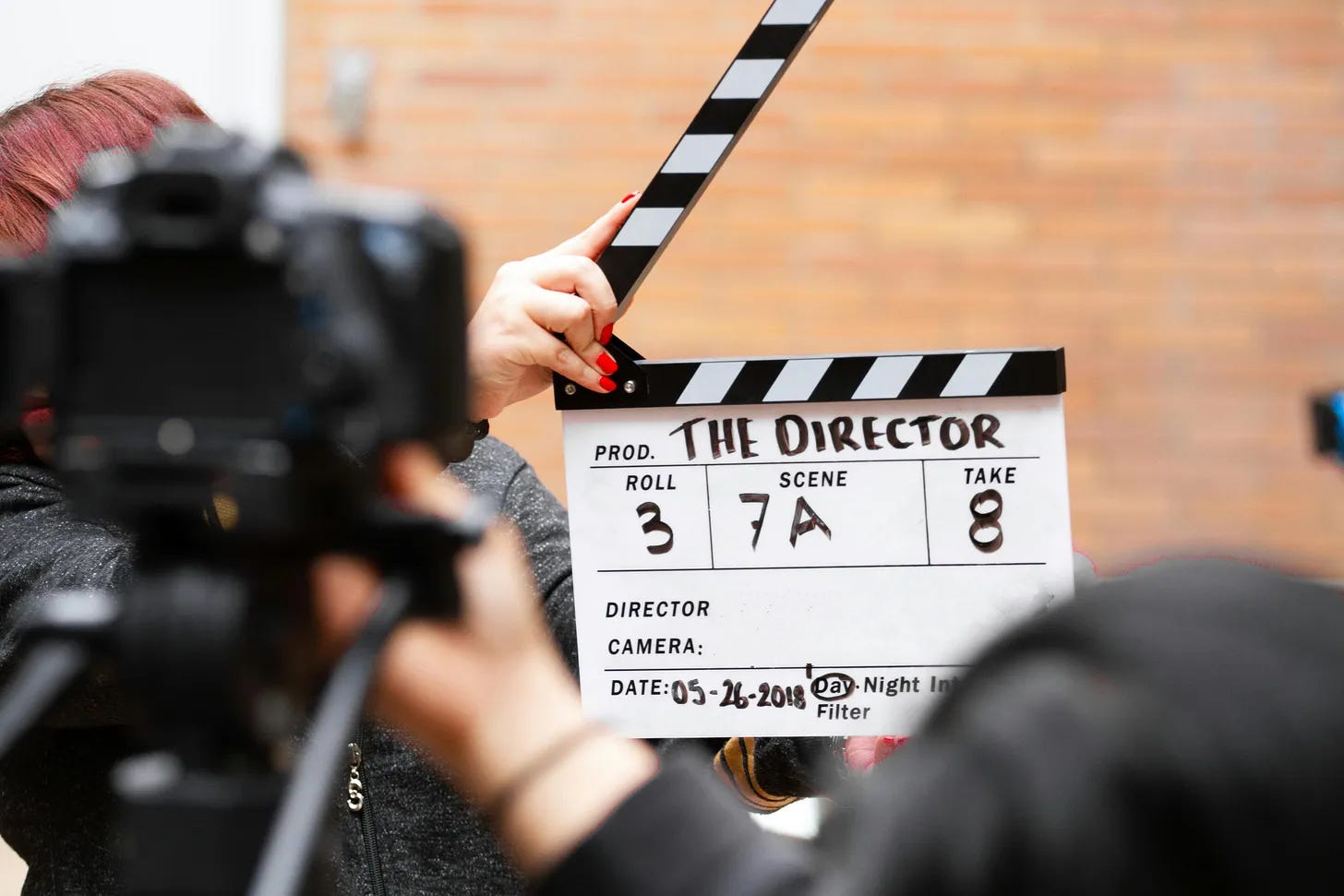
To explore that gap, I spoke with an experienced independent filmmaker who has worked across writing, directing, editing, and production. We did not talk about film as an industry. We talked about decisions, learning, commitment, and responsibility. His latest film offers a useful comparison, not for romantic reasons, but because it openly deals with uncertainty, delayed feedback, and irreversible decisions.
This conversation does not aim to replace innovation methods. It confronts innovation thinking with a different logic from outside the industry.
The interview is published anonymously at the filmmaker’s request.
How do you recognize that an idea is more than just interesting?
I constantly have ideas. Every person is interesting. Every situation could theoretically become a film. Sometimes I carry protagonists or events with me for weeks. In the end, it is always a gut decision.
With my last film, it happened like this: I heard about what the two protagonists were planning. I found it interesting, nothing more. Then I stopped thinking about it. Months later, I heard they had actually started working together. I drove there, met them, and in that moment it became clear. I was sitting across from them and knew immediately: This is a film. Or more precisely: For me, this is a film.
That “for me” is decisive. At the beginning, you do not know where the journey will lead. You will get rejections. Funding bodies will say no. People will comment, “That’s supposed to be a film?” On top of that come your own doubts. But once that inner yes is there, you stay with it. Without that commitment, an idea becomes something you set aside at the first resistance.
How did you start working concretely without making large investments?
Paid membership includes
Weekly deep-dive (paid-only)
Full archive
Comment access
Founding Decision Circle ($499/year, 10 seats) includes
1 structured decision submission per month
Written response within 5 working days
Priority queue
I went out with my own camera and my own microphone. Alone. A classic one-person operation. The only costs were my time and a fair wage for myself. I did not need to hire anyone, pay anyone, organize transport, catering, or logistics.
That gave me enormous freedom. I did not have to coordinate schedules, consider others, or justify being somewhere. I could arrive or leave whenever I wanted. I could also just be present without necessarily filming. With a crew, everything would have become more complex and more expensive immediately, simply because of planning and coordination.
This allowed me to gather material and observe early without locking myself in. Learning was cheap. Decisions were reversible. At the beginning, I did not yet know what the film would become, and that is exactly why this way of working mattered. Only later, when it became clearer what it was about, did structure and more formal steps follow.
Why did you deliberately avoid a script or early control?
I wanted to be as neutral as possible with the camera. My presence needed to become normal, almost invisible. Being filmed always carries something manipulative, and I did not want the protagonists to perform for me or be pushed into roles.
So I deliberately avoided a script or directing instructions. I wanted to observe, not intervene. There were many days when I did not capture anything usable. Often I just sat there and watched. It sometimes felt inefficient, but that is precisely what later enabled the relevant scenes to emerge.
People first had to get used to me and the camera. Only then could they behave as they truly are. If I had directed or tried to provoke situations, many of those moments would never have happened. It was important to me that what happens in the film grows out of their everyday life, not out of my instructions.
How did you notice that openness slowly turned into direction?
Over time, patterns began to appear in the material. I could anticipate which conflicts would develop, sometimes before they actually happened. The material started to develop its own logic. It was not that everything suddenly became clear, but I sensed what would matter and what was secondary.
A key step was writing the dossier for funding applications. Writing forced structure into my thinking. Not because I suddenly had all the answers, but because I had to name things. At the same time, I kept filming and collecting material.
The process gradually became more structured without sacrificing openness. Sometimes while filming, I already sensed where a scene might land later in the film. Direction did not emerge from a plan, but from accumulation and repetition within the material itself.
When did you seek feedback, and how did you handle it?
I sought feedback whenever I felt stuck. Not out of insecurity, but because I was going in circles. I felt almost finished and at the same time knew something was missing. In that moment, I had two options: shelve the project or open it up and invite feedback.
Who the feedback came from was critical. Many people do not give helpful feedback. Some are too nice and avoid discomfort. Others do not understand what you are trying to do. Neither helps.
The most valuable feedback was often blunt and undiplomatic. It named the problems already in the room, even if I had not yet fully faced them. That was uncomfortable, but clarifying. Too much feedback, however, creates confusion rather than clarity.
How did you deal with contradictory feedback?
I learned that feedback is always a snapshot. It depends heavily on the person, their perspective, even their mood. If you gather too much feedback, it becomes messy and confusing. So I did not collect feedback indiscriminately. I worked with it deliberately.
When selecting scenes from the large volume of material, my central question was always: Why must this scene be in the film? “I just want it” was not enough. If I could clearly articulate why a scene mattered and what it contributed to the story, it stayed — even if others disagreed. If I could not justify it, I removed it.
In the end, I had to decide. Even when feedback was reasonable or well-intentioned. That responsibility was mine and mine alone. Feedback helps you think. The decision remains yours.
When did you know that the core of the film was no longer negotiable, and what changed at that point?
In film, that moment is called Picture Lock. The film is no longer edited. No new scenes are added. None are removed. Nothing is extended or shortened. The film is locked from start to finish, for example 85 minutes and 20 frames, and that is what it remains.
Up until Picture Lock, I had virtually no external costs. The largest investment was my time and a fair wage for myself. Learning was inexpensive. Decisions were reversible. I could try things, discard them, rethink them without immediately losing money.
After that, the film goes to the studios: sound design, image finishing, color grading. Nothing is changed at the content level anymore. It is polished and corrected. Images are brightened, colors and contrast adjusted, audio errors fixed, sounds added.
The search and the real shaping happen in the editing room. Before Picture Lock, it must be clear what the film is about. Afterward, it is no longer about finding, only about finalizing. The one time I intervened in content after Picture Lock was an exception, and it made everything more complicated.
To whom did you feel accountable during the project?
First and foremost, I felt accountable to the protagonists. They gave me significant trust, and I knew I had to handle that carefully. Especially during editing, I felt that responsibility strongly. One of them could easily appear as a difficult character. I did not want anyone to feel misrepresented or exposed.
I promised to show them the film before completion. If they had felt a scene was too sensitive or unacceptable, I would have removed it. When we watched the rough cut together, I was extremely nervous. I did not know how they would react. If they had fundamentally rejected the film or not recognized themselves in it, that would have been a clear stop criterion for me.
It mattered that both were portrayed fairly and in their individuality. That balance was more important to me than formal or dramatic considerations. Without their consent, I would not have continued.
Where is the line between persistence and self-deception?
For me, the greater danger was not staying too long, but stopping too early. Self-deception would have meant simplifying out of convenience or impatience and declaring it done too soon. During editing, I sometimes felt it should be finished, while internally knowing something was still off.
Persistence was necessary to truly understand how the film needed to be told. I needed that time to gain clarity and make the right decisions. Finishing earlier might have reduced pressure, but not improved the result.
Self-deception would have been confusing minimalism with clarity, or leaving things unresolved simply because they were hard. The boundary lies where you honestly examine whether additional work still generates insight, or merely serves to avoid uncertainty.
How do you define success in this project?
For me, this project was successful in several ways. Personally, because I realized the entire film alone. That was a major achievement. It was also a success because the protagonists gained something from the process and felt represented fairly. That was essential to me.
Another dimension was resonance. The film triggered reactions. People talked about it. It polarized. Many took something from the story, and that was my goal. It was not primarily about numbers or revenue, but about impact.
The greatest gain was the learning curve. Through this project, I developed a much clearer sense of when something feels right and when it does not. That experience changed how I view my own work and shapes how I approach decisions and new projects today.
Closing Reflection
What this conversation reveals to me is not a creative anomaly. It exposes a different logic of commitment under uncertainty.
The film does not begin with clarity. It begins with disciplined openness. Observation precedes structure. Structure precedes commitment. Learning happens while decisions are still reversible.
In most innovation environments, that order is inverted. Teams are pushed toward solutions because budgets, roadmaps, and governance cycles demand visible progress. Exploration is tolerated only briefly. Commitment comes before conviction.
The film process draws a hard line. As long as only time, attention, and judgment are invested, learning is cheap. Once Picture Lock is declared, the economics change. From that moment on, every adjustment is costly. Exploration ends. Execution begins.
Many innovation teams never define their equivalent of Picture Lock. They drift from exploration to building a solution into scaling without explicitly deciding that the core is understood and non-negotiable — as a crisp “problem prompt.” Capital is deployed while the underlaying story is still fluid.
The more uncomfortable insight concerns responsibility. In film, accountability sits with the creator. Not with funding bodies. Not with audience expectations. Not with external delayed audience validation. Feedback informs the work, but it does not decide it. The decision remains personal and owned.
In corporate innovation, responsibility is frequently diffused. Decisions are spread across committees, metrics, dashboards, and stakeholder expectations. This creates activity without ownership. Learning happens, but judgment is outsourced.
Innovation rarely fails because teams do not test enough. It fails because commitment happens without someone explicitly saying: this is the core, I stand behind it, and I accept the consequences.
Film reminds us of something startup founders know early and corporations tend to forget: judgment cannot be delegated. Exploration deserves protection until conviction is earned. And capital should be bound only once the story is locked.
The real question for innovators is simple:
What is your Picture Lock — and who has the authority and courage to declare it?