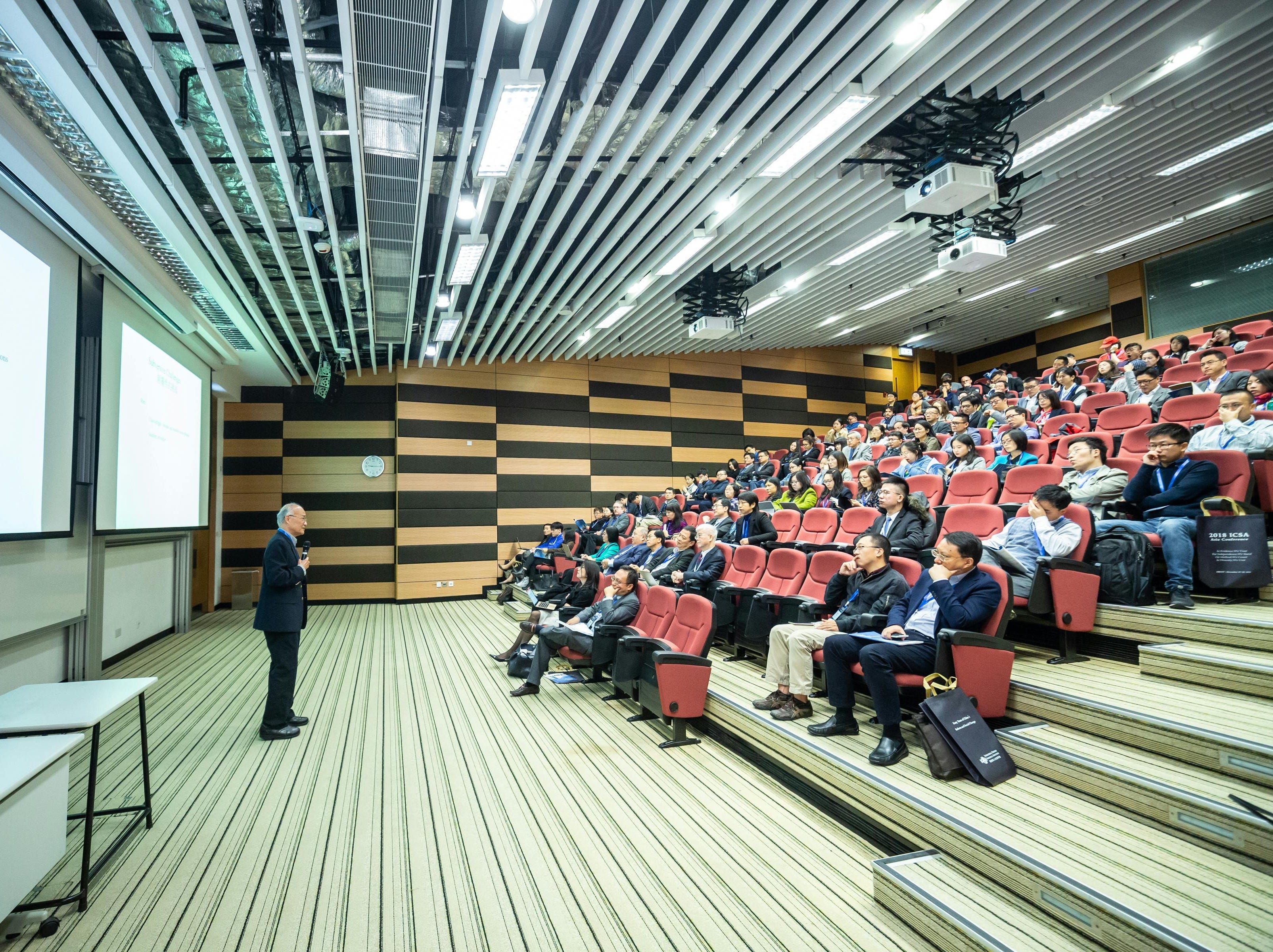
I sat in a classroom recently and felt that familiar unease.
A lecturer. A lot of slides. A hybrid setup left over from COVID that served no one particularly well. And a room full of people with completely different starting points, confidence levels, and speeds of processing what was being said.
A few were already past the material. You could see it — the quiet phone checks, the secondary tabs, the polite patience of people who had already been here. Others were visibly struggling to keep up. Not because they were less capable. Because the pace was set for a fictional average person who was not actually in the room.
That gap is not unusual. It is the default. It has been the default for as long as there have been classrooms.
The Classroom Has Changed Less Than the World Around It
The same pattern runs through companies. A handful of employees are living at the edge of what is current. Others are quietly falling behind. The gap widens because admitting it publicly is expensive — socially, professionally, sometimes politically — and the longer it goes unaddressed, the harder it becomes to close.
The systems around them still assume everyone moves at the same speed.
They do not.
Most Learning Is Still Organized Like Batch Processing
That is the actual problem, and it is worth saying plainly.
Schools still teach groups as if exposure were the same thing as learning. Companies still develop employees as if distributing content were the same thing as building capability.
The results are predictable. Some people are bored. Some are lost. Most learn less than they could. And the organization pays for it quietly, in performance gaps no one can easily trace back to a training budget line.
Even where the pressure to stay current is highest — the workplace — adult learning is still often shallow and generic. The OECD reports that health and safety training is the most common type of non-formal job-related learning, that 42 percent of such activities last one day or less, and another 40 percent last between one day and one week. The OECD also notes that over-reliance on short formats limits deeper reskilling. (OECD)
That should not surprise anyone. Short generic modules are easy to procure, easy to assign, and easy to report upward. They just are not especially good at closing real capability gaps. They are good at creating the appearance of closing real capability gaps, which is a different thing.
The Skills Problem Is Bigger Than Most Institutions Admit
The labor market is moving faster than the systems designed to prepare people for it.
The World Economic Forum expects 39 percent of workers’ core skills to change by 2030. LinkedIn’s 2025 Workplace Learning Report found that 49 percent of learning and development professionals say their executives are worried employees do not have the right skills to execute business strategy. (World Economic Forum)
That is not a future problem. That is a current one, already showing up in hiring difficulties, project delays, and leaders quietly doing workarounds because the team cannot yet do what the strategy requires.
The OECD adds a sharper point. One in three job vacancies in OECD economies now has high AI exposure, but the vast majority of affected workers will not need to become AI specialists. They will need general AI literacy — enough to use, question, and collaborate with AI systems without being either afraid of them or naive about them. (OECD)
That changes the job of training entirely. The challenge is no longer sending a small expert class to expensive courses every few years. It is keeping a broad workforce current in smaller, role-specific, repeated learning loops. That is a different infrastructure problem. Most organizations are not set up for it.
Degrees Every Ten Years Are the Wrong Update Cycle
Many institutions still behave as if capability can be refreshed in large, infrequent blocks.
Go back to university. Attend a certificate program. Watch a video library. Read a stack of papers. Then return to work and hope the update holds for a few years before the next refresh.
That model is too slow for the environment we are in. Not slightly too slow. Structurally mismatched.
Deloitte’s 2026 Global Human Capital Trends report is direct about this. Traditional change management and training may be too slow as the pace of change accelerates, and the organizations that win will build always-on, real-time adaptability into work itself. (Deloitte)
Learning is moving from periodic intervention to continuous infrastructure. That is not a trend to watch. It is a redesign that is already under way in the organizations paying closest attention.
What the New Technology Actually Changes
The important shift is not that AI can explain things.
Search engines already did that. Video platforms already did that. Corporate learning management systems already did that, badly, with a completion certificate at the end to prove it.
What is new is that the latest tools can approximate some of the functions that made one-to-one tutoring superior all along: diagnosis, pacing, targeted feedback, repetition without embarrassment, and genuine adaptation to the person in front of the system.
A 2025 randomized controlled trial published in Scientific Reports found that students using a well-designed AI tutor learned significantly more in less time than students in standard active learning conditions, and reported higher engagement throughout. The authors traced the advantage to two things: personalized feedback available on demand, and the ability to control their own pace. (Nature)
One study does not settle a field. But it points clearly in a direction.
The bottleneck in learning is no longer access to content. Everyone has access to content. The bottleneck is whether the system responds to different learners differently. That is what has been missing, and that is what is now becoming technically feasible at scale.
Hyper-personalized Learning Is Not Just for Schools
The workplace case may actually be stronger than the classroom case.
In a company, the objective is not broad educational exposure. It is role-relevant competence, applied in a specific context, under real conditions. That makes personalization more valuable because the target is clearer and the cost of missing it is more visible.
A modern learning stack can already combine several capabilities into one continuous loop: diagnose what someone knows, identify the gap, teach at the right level, pull in role-specific material, simulate practice, test for real understanding, and return to weak points over time without making that a public event.
The pieces already exist. Large language models can tutor conversationally. Retrieval systems can ground instruction in company-specific documents and standards. Speech interfaces can turn learning into dialogue instead of clicking through slides. Simulations can let people practice sales conversations, negotiations, compliance decisions, or technical troubleshooting before they face them live. Spaced repetition and adaptive assessment can prevent capability from decaying right after the training event, which is what currently happens in most organizations.
That is a fundamentally different proposition from “here is a video library, good luck.” It is the difference between content distribution and actual development.
The Deeper Advantage Is Privacy
There is a reason this matters beyond efficiency, and it is underappreciated.
Hyper-personalized learning makes it possible to close gaps without public humiliation.
In most classrooms and most companies, learning gaps are social facts before they become technical problems. People hide confusion because confusion signals weakness. They avoid basic questions because basic questions feel expensive. They postpone catching up because the identity cost grows the longer they wait.
A good personalized system changes that dynamic. It gives someone a place to ask the obvious question, slow the pace, repeat the concept, and recover the missing foundation without broadcasting the gap to the room or the manager.
That matters more than most leaders acknowledge. Because the capability problem in most organizations is not that people cannot learn. It is that the conditions for learning safely do not exist. Fix the conditions, and the capability follows.
This Does Not Make Teachers and Managers Irrelevant
It changes their job.
If machines become better at diagnosis, repetition, and individualized pacing, the human teacher or manager should move up the stack. Less broadcasting. More interpretation. Less generic delivery. More coaching, escalation, and standards.
UNESCO frames AI in education as an opportunity for personalized learning but insists on a human-centered approach precisely because the same tools raise real risks around inequality, privacy, safety, and governance. Rapid AI adoption in education can widen divides when institutions do not build proper safeguards and inclusive access. (UNESCO)
That is the right frame. The question is not teacher or machine. It is whether machines reduce human teaching to supervision, or free humans to do the parts that actually require judgment.
What Best-in-Class Companies Should Do Differently
A company serious about having the most capable people cannot rely on generic mass training. It needs to accept a basic fact: employees do not start from the same point, do not learn at the same speed, and do not need the same sequence of instruction.
That means rebuilding development around individuals, not cohorts.
Not because personalization sounds modern. Because batch training wastes time at both ends. The advanced learner is slowed down. The struggling learner is left behind. The organization pays twice — first for training that does not fit, then for the performance gaps that remain.
The better model is not complicated in principle. Start with role-specific capability maps. Run private diagnostics. Build individualized learning paths. Embed tutoring into the flow of work. Use managers as coaches and context-setters rather than slide narrators. Measure applied competence, not course completion.
That is how development becomes strategic rather than ceremonial.
The Real Decision
The expensive question is not whether hyper-personalized learning is coming.
It is whether institutions are willing to stop organizing learning around what is easy to deliver and start organizing it around how people actually improve.
That requires giving something up.
Schools have to give up the idea that equal exposure equals equal learning. Companies have to give up the convenience of generic training catalogs as proof that development is being handled. Leaders have to give up the comfort of reporting completions instead of measuring competence.
That is the real loss. Because once you accept that learning is individual, private, and continuous, the old model becomes genuinely hard to defend.
What Will Matter Next
The winners will not be the institutions with the most content. They will be the ones with the best diagnostic loops, the safest learning environments, the clearest capability standards, and the tightest integration of tutoring into real work.
The advantage shifts from content ownership to progression design.
The biggest opportunity is not another education platform or another corporate course marketplace. It is the infrastructure for continuous expertise renewal. Not a degree every ten years. Not a generic video every quarter. A system that helps people stay current before the gap becomes visible, political, or expensive.
That is where hyper-personalized development stops being a technology story and becomes a competitive one.
In a world where skills move faster than institutions, the best organization will not be the one that knows the most today. It will be the one that helps its people update fastest tomorrow.