I came across the book Connected Strategy by accident – someone had recommended it in a LinkedIn comment. I picked it up and read it in one go.
The core idea is compelling: how companies can create continuous connections with their customers to improve experiences and efficiency at the same time. It’s about turning episodic interactions into ongoing relationships. The book is clear, practical, and relevant.
And still, I kept stumbling over the same point: To become “connected” to a company, you already need to feel friction – and have the will to interact with that specific company and their “connected products and services”. The lens is that of the company, not of the human. More specifically: it starts only once a person is already recognized as a potential customer (marketing or sales lead). But what happens before? And what remains after the transaction?
Connected Strategy starts when someone becomes a customer. Jobs to be Done starts when someone becomes restless.
People don't start with a product – they start with friction
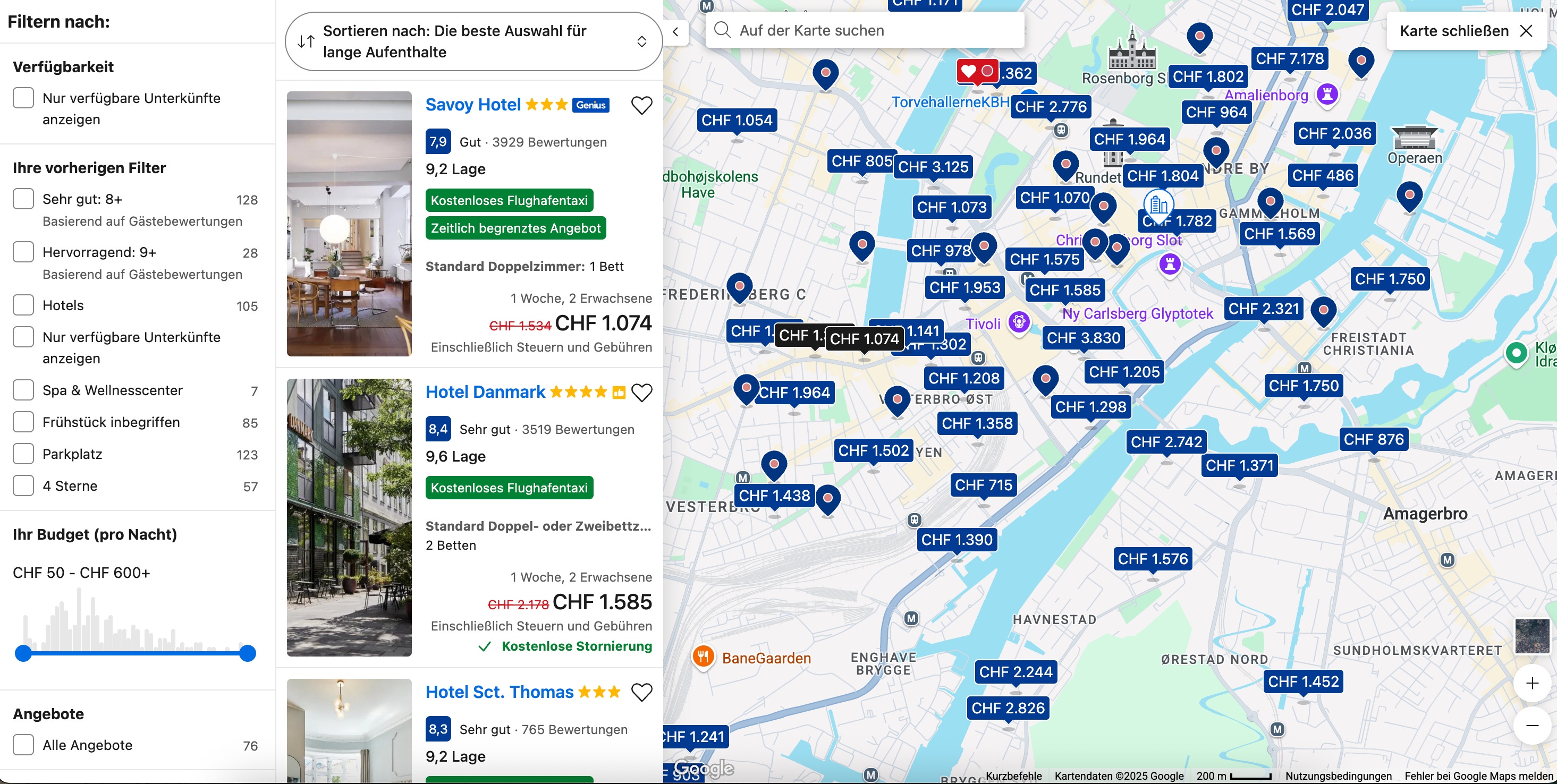
Let me give you a simple example: I’m currently planning a trip to Copenhagen. I’ve never been there.
What’s on my mind?
Which neighborhood fits my vibe – walkable, good food, interesting but safe?
What kind of budget do I need to plan for, realistically?
How well-connected are areas via public transport?
How far is everything on foot?
Are there any good bars or local restaurants nearby?
And can I get a quiet room with a truly comfortable bed?
These are the questions I’m trying to answer (my jobs to be done). They have nothing to do with hotel room types or star ratings. But they define my choice. Yet not a single booking platform or hotel website helps me with them.
Jobs to be Done (JTBD) is both a mindset shift and a lens: away from thinking in terms of customers, products, or services — and toward understanding the progress people are trying to make in their lives. It helps uncover what people are trying to get done, which outcomes they seek, and which struggles they face — often before they even interact with a company, brand, or solution.
All platforms assume that I already know what I’m looking for. I don’t. I’m still trying to figure it out.
The flaw in connected strategy
And that’s the issue: Connected Strategy is about optimizing relationships, while decreasing costs (or in other words data rich relations) – but only once someone is already acting like a customer. It’s built around observed behaviour: clicks, purchases, feedback.
But it misses what happens before visibility: The internal progress someone is trying to make – long before they type in a search field or click a button. Whether this is used for a customer acquisition or innovation process.
That’s exactly where the Jobs to be Done perspective begins. Not with the user. Not with the customer. But with the person. With their friction. Their aspiration. Their circumstances. Their constraints.
The classic customer journey starts too late. The actual Jobs Journey starts much earlier.
What would a JTBD-based solution look like?
Instead of:
Superior Room in Copenhagen Vesterbro – 15 min from city centre,
How about:
Quiet and comfortable room for first time city explorers – 5 min from the bar and restaurant scene, 3 min to the central metro station and from there in only 1-2 stops to the sightseeing hotspots. Handpicked restaurant tips and taxi trip from the airport included.
Or better yet, the whole discovery experience changes:
Start with: “What matters more to you – a vibrant area or peace and quiet?”
Offer budget simulations across neighborhoods and travel seasons
Show walkability, public transport and restaurant tips on one interactive map
Filter hotels by things that actually matter: atmosphere, bed quality, noise level
This isn’t about selling more rooms. It’s about giving me mental clarity and confidence in my choice.
Stuck with this topic and need hands-on help?

Bottom line
Connected Strategy is a valuable framework. But it starts too late.
If we only optimize what happens after visibility, we ignore the most crucial part of decision-making: The moment someone starts seeking progress.
That’s where innovation needs to start. Not with offerings – but with unmet needs. Not with behavior – but with jobs.
P.S: Add on for paid subscriptions - Curious about Jobs to be Done in practice?
If you’ve read this far, you’re probably not just browsing – you’re sensing friction. Maybe you’re searching for better ways to innovate, to understand what really drives your customers, or to shift your team’s perspective from features to real human progress.
That’s exactly where Jobs to be Done shines. And it’s also where I’ve focused my work.
Right now, I’m prototyping the Jobs Insights Canvas – a practical tool designed to help you uncover and structure the real jobs your users are trying to get done, before they ever become customers.
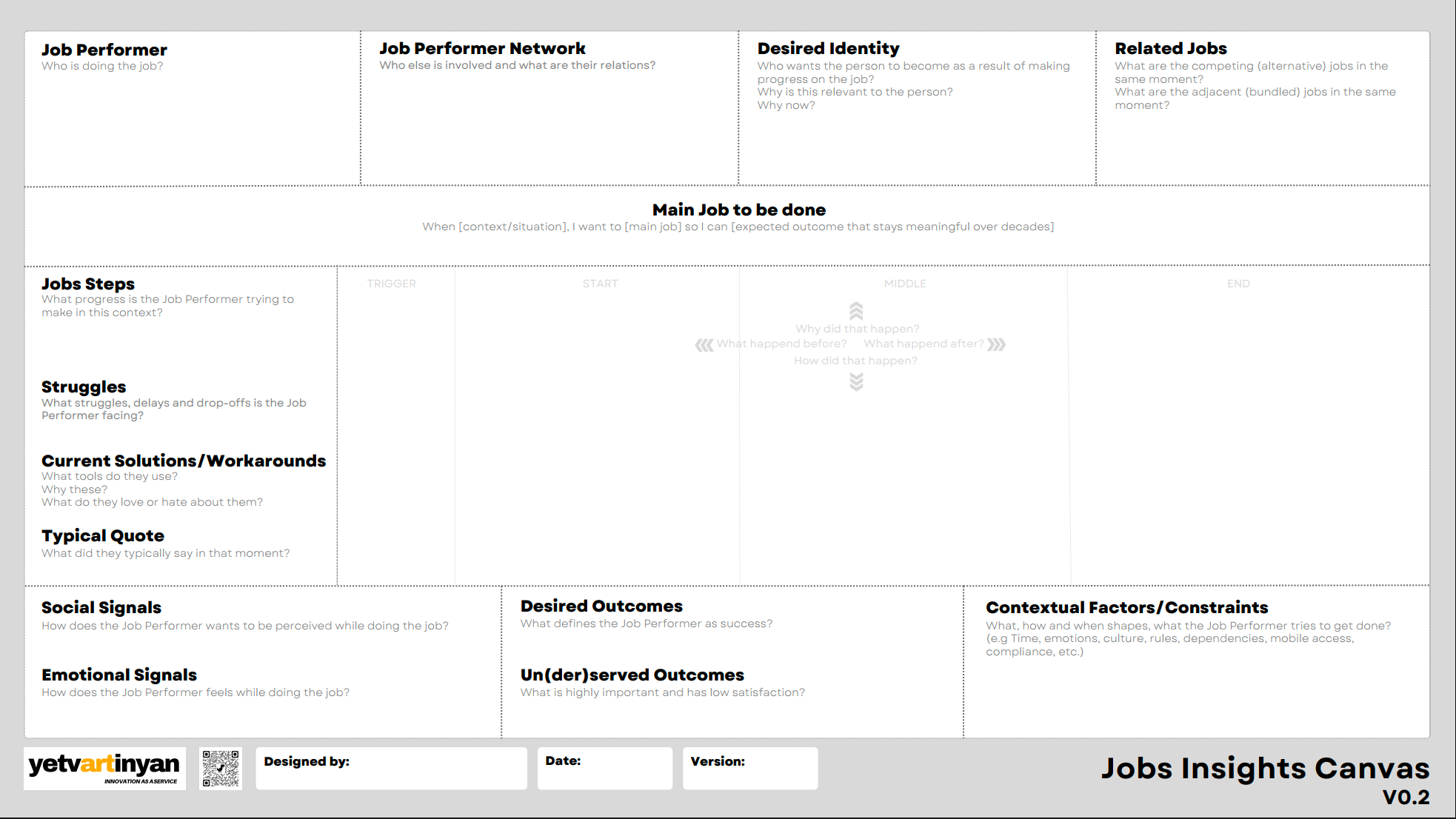
If you're interested in getting early access or a training session, just reach out. I’m happy to share the current version and hear your feedback.