At first glance, it sounds like chaos versus control. Startups embrace uncertainty, testing, breaking, and learning on the fly. The contrast: Established companies build processes to minimize surprises and keep everything running smoothly (while killing anomalies and increasing operational efficiency).
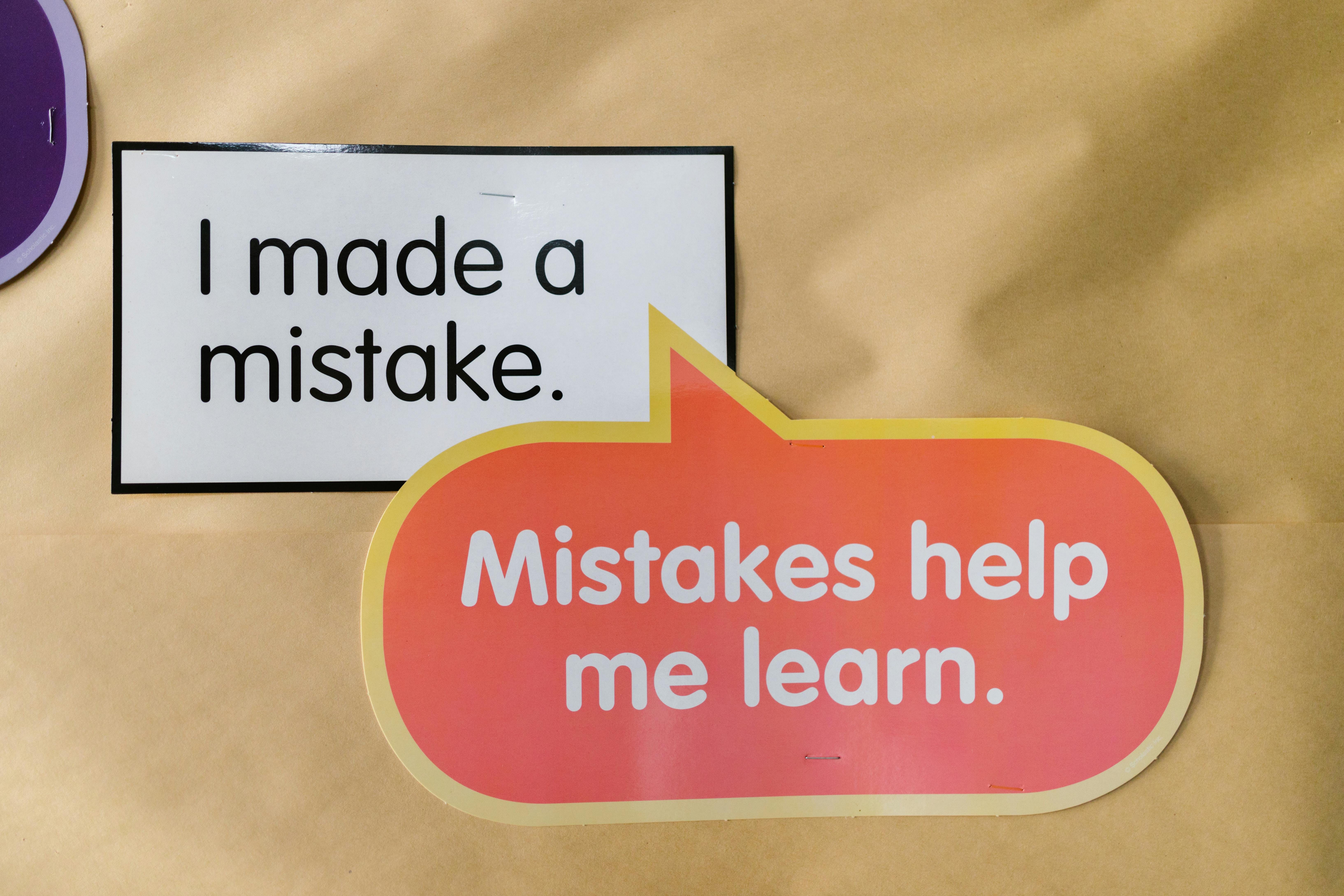
But this is where most organizations hit a wall. Because avoiding mistakes doesn’t actually move you forward. Learning from them does.
Startups grow by having bold assumptions, experimenting, making mistakes and learn fast. Corporates survive by avoiding them.
The Illusion of Control and What It Costs You
Large companies spend millions reducing variability, tightening standards, and building safe, predictable operations. That feels good—it’s comforting. You know what to expect.
But here’s the catch: when everything feels safe and predictable, you stop noticing what’s changing.
A weird customer request? Dismissed.
A sudden drop in engagement? Blamed on randomness.
An inofficial intrapreneurial team working around the system? Seen as a rogue exception to be eliminated.
You don’t need a better process. You need a better way to learn when things go wrong.
The problem isn’t that mistakes happen—it’s that these “mistakes” often carry clues. Clues that something new is emerging, that a market is shifting, that people are coming up with workarounds, or that your product is losing touch.
If you keep smoothing out those bumps without listening, you’re basically driving blind.
Mistakes, Anomalies, Signals: What’s the Difference?
Most people see mistakes as something bad and anomalies as noise. But what if we flipped that?
What if those “mistakes” and “weird signals” are actually the earliest hints of what’s next? What if surprises aren’t failures, but invitations?
Instead of asking, “What went wrong?” try asking, “What is this trying to tell us?”
Amazon’s rise wasn’t because they never failed. It was because Jeff Bezos treated every failed experiment—like the Fire Phone—as a data point, not a defeat. That approach made Amazon’s growth possible. They learned fast and adapted.
Why “Stability” Can Be Your Biggest Weakness
Processes, governance, and quality controls are important. But they’re designed for the known. Not the unknown.
And in today’s world, the unknown is exactly what you face every day. Customer needs change fast. New competitors pop up overnight. Technologies redefine entire industries.
If your organization prizes stability above all else, you risk becoming irrelevant. You’re not building resilience—you’re building rigidity.
Resilience isn’t about resisting shocks. It’s about learning fast and adapting.
Toyota famously embedded “kaizen”—continuous improvement—into its culture. But they also empowered workers to stop the production line when they spotted anomalies. This wasn’t about punishment. It was about learning and preventing small problems from becoming big ones.
Advertisement

What Does It Take to Learn at Scale?
Here’s the rub: most companies say they want to learn. But their systems reward playing it safe, not speaking up.
No one gets a bonus for surfacing an inconvenient truth. People get promoted for delivering the numbers—no matter what it took to make them look good.
To change that, you need to redesign how you handle surprises.
Try this:
Log every anomaly, not just failures.
Ask what assumptions broke, not just who broke them.
Make it safe to challenge the status quo.
Celebrate curiosity as much as success.
A Simple Framework: Mistake, Outlier, or Signal?
When something unexpected happens, it helps to apply a simple lens:
Mistake — Was this preventable? Did someone miss a known rule or standard?
Outlier — Was this a rare, one-off event with limited impact?
Signal — Could this be an early indicator of a bigger change?
Knowing how to categorize surprises guides your response. Not every deviation deserves a full investigation, but every signal does.
How Anomaly-Driven Organizations See the World Differently
The best companies have built what I call a “second operating system” alongside their execution engine.
One system runs daily operations, hitting targets, and reducing errors.
The other listens for whispers—those tiny oddities, unexpected signals, and small failures that most overlook.
This second system doesn’t punish mistakes. It turns them into stories. Stories that reveal blind spots and unlock new opportunities.
What Most Dashboards Won’t Show You
Metrics can tell you what’s happening. But they rarely tell you why.
Customer churn might show up in your quarterly review—but the reasons? Buried in a lost support ticket, a dismissive sales interaction, or a competitor feature that suddenly matters more than yours.
That’s the problem with scale. As you grow, your view of reality gets averaged, diluted, and smoothed. The sharp signals that used to guide you get lost in the noise.
Unless you design for it, learning gets filtered out.
Building a Learning System
Here’s what that looks like in practice:
Weekly anomaly reviews — Ask your product, ops, and support teams: What surprised us this week?
Anomaly ownership — Assign someone not to solve, but to understand the story behind it.
Uncomfortable truths tracking — Log the things that don’t fit, not just what’s on target.
These aren’t expensive moves. But they require air cover from leadership. A cultural shift from “Who’s at fault?” to “What’s this telling us?”
Without that, anomalies get buried. Patterns get missed. And you lose your edge.
Ask Yourself: What Is Your Organization Really Built For?
Is your company designed to avoid mistakes at all costs? Or to learn from them and evolve?
If you’re focused on avoiding errors, you might feel stable today—but you’re not ready for tomorrow.
If you’re building an organisation that learns faster than the world changes, you’re playing the long game. And that’s the only real advantage left.
PS: Stuck with this topic and need hands-on help?
You can book me for workshops, keynotes or one-on-one sparring - Let’s talk.