
I did not grow up surrounded by abundance, as the child of emigrants with two brothers. There were no ready-made toys, no money to buy whatever I wanted, and no catalogue of options to choose from. When you grow up like that, you do not learn how to shop for solutions. You learn how to arrive at them.
If you cannot afford ready-made toys and sport utilities, you start building them yourself, using your imagination. You do not get to skip understanding. You cannot outsource thinking to a product made by an expert. Before you can build anything, you need to figure out what it is supposed to do and why it might work at all. And when you get it wrong, there is no replacement waiting. You try again.
What looks like scarcity from the outside is, in practice, a long education in framing, reframing and causality. I learned how things worked because I had to make them work. I learned why they worked because copying without understanding only led to broken outcomes. And I learned that most solutions only show themselves after you exhaust the first dozen that seemed reasonable but were not.
You do not call this innovation as a child. You call it curiosity, or boredom. Only later do you realize that this was training in thinking beyond the obvious, because the obvious was usually unaffordable.
The Habit That Never Left
That pattern stayed with me. I still cannot encounter something interesting without wanting to understand how it is built. Building toys, sportswear, musical instruments, furniture, lamps, fermenting veggies and drinks, brewing beer, baking and cooking, drawing and sketching, writing code, mechanical systems, digital workflows, business models, it does not matter. If I cannot afford to treat it as a black box, I am forced to open it.
This is not about creativity. I never thought of myself as the creative type. It is something more basic and more demanding: the need to understand a system’s causality well enough that you could rebuild it under different constraints. Not perfectly. Not elegantly. But well enough to see what is essential and what is optional.
That process has a humbling side effect. The deeper you go, the clearer it becomes how much expertise is embedded in even simple things. Nothing that works reliably is trivial. You stop assuming ease. You stop mistaking polish for simplicity.
Most people stop at preference. I cannot. If something draws my attention, the next questions arrive automatically: How does this function? Why this and not something else? Where does it fail? Once you start thinking that way, it becomes difficult to ever accept a finished surface again.
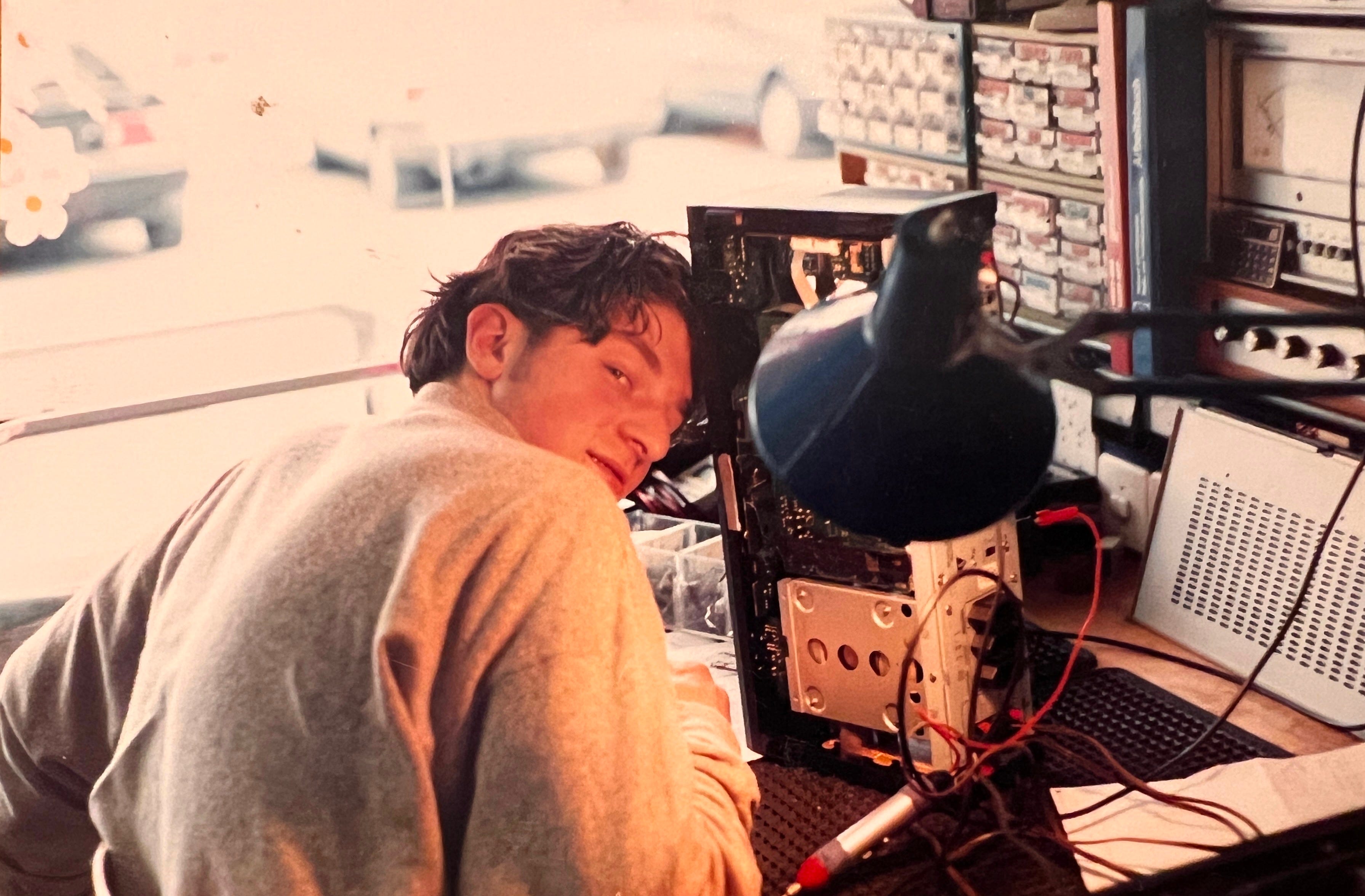
Divergent Thinking Is Learned, Not Gifted
Creativity, divergent and convergent thinking is often romanticized as a personality trait, something you either have or do not. In reality, it is a byproduct of repetition under constraint. When you cannot buy your way to an answer, you must tune in, understand and generate alternatives. Many of them. And most of them will be wrong and you need to let them go.
You learn to distrust your first idea because it is almost always the most obvious one. You learn to keep going, not because quantity magically produces quality, but because nothing interesting appears until the predictable answers are exhausted and you are entering the learning mode. Iteration is not a method. It is a consequence of not having shortcuts.
This is the part people avoid. They want the breakthrough without the mess. The elegant solution without the pile of failed attempts behind it. But divergent thinking is built in discomfort. In reframing. In trial and error. In refinement. In reshaping half-working ideas until something finally holds.
That discipline stays with you. It teaches range. And range matters more than inspiration.
Why This Matters in the Age of AI
Large language models make this dynamic visible. Ask for a tool and you get the usual suspects. Ask for a flower and you get the same few names. Ask for a business idea and you get something that sounds suspiciously like a template.
The model is not failing. It is answering the most affordable question. To get something useful, you have to push it. Stress it. Reframe the prompt. Change the constraints. The moment you stop buying the first answer, better ones start to appear.
Human thinking works the same way. If you want an unusual but fitting solution, you must be willing to generate many paths, understand their mechanics, and discard most of them. Not creativity. Range. And range only emerges when you stay with the problem long enough to understand its inner logic.
The Humility of Understanding
There is another layer to this. Understanding how things work keeps you grounded. It makes it harder to overestimate yourself. You start noticing the invisible skill embedded everywhere. A good loaf of bread is not an accident. A smooth app experience is not simple. A strong service interaction is not luck.
When you understand mechanics, physical, digital, or human, respect follows naturally. You stop assuming progress is obvious. You stop confusing confidence with competence. And you get better at your own work because ego has less room to hide.
Humility is not softness. It is an operating advantage. It slows you down just enough to notice what others skip. And it keeps you from mistaking early certainty for truth.
Divergent Thinking as a Way of Living
Looking back, the constraints of my childhood taught me something I still rely on: nothing is fixed, everything can be rebuilt, and most problems have more viable solutions than people admit and are willing to explore.
If you can generate those paths, understand why they fail, and refine them without rushing to closure, you eventually arrive at an answer that looks unusual but feels inevitable once seen.
That is the real value of divergent thinking. Not genius. Not talent. Just the willingness to stay with curiosity and uncertainty longer than others, to raise the “dumb” questions followed by why or how, to understand before building, and to keep rebuilding (hardware, software, business models) until the logic holds.
This is not nostalgia. It is a reminder. Constraints did not limit me. They removed shortcuts. And in doing so, they trained a way of thinking that still shapes how I work and how I solve problems today.
If there is one thing I trust in innovation, it is this:
the person who cannot afford certainty learns faster than the one who buys it.