


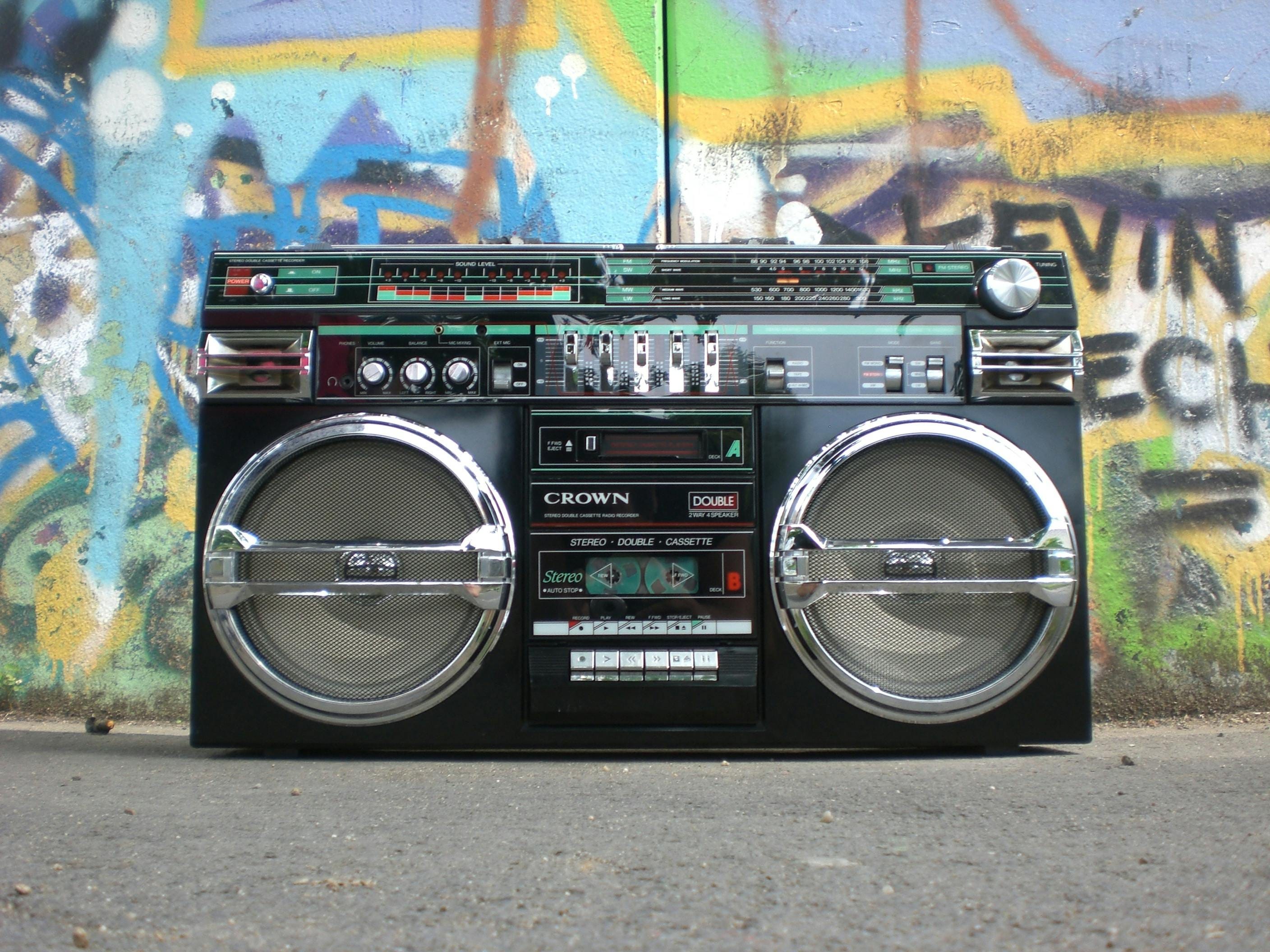
Picture a kid in the 1980s walking down the street with a massive ghettoblaster on their shoulder. The music is loud, the batteries heavy, the device almost absurdly oversized. Fast forward to today: a teenager is sitting on a train, earbuds in, lost in a playlist streamed from their phone. Two very different products, but the same fundamental need.
The job never changed. People still want to enjoy music wherever they are. What changed were the technologies that made that job easier, lighter, more personal, and eventually infinite.
This is the core lesson of Jobs to Be Done (JTBD). If you define your business by the product you sell, you will one day become obsolete. If you define it by the job your customers are hiring you to do, you can adapt and thrive across generations of technology.
Products die. Jobs don’t.
The Core Job Never Changed
JTBD isn’t about creativity. It’s about stripping away technology and focusing on what people are really trying to accomplish.
Nobody ever wanted a cassette. Or a CD. Or an MP3 file. Those were just means to an end. The real job was simple: help me enjoy music wherever I am.
When you frame it this way, the progression of solutions makes sense. Each generation of product was another attempt to deliver on that timeless job, shaped by new constraints, new technologies, and new cultural currents.
Advertisment
Stuck with this topic and need hands-on help?
You can book me for workshops, keynotes, or one-on-one sparring – Let’s talk.

Functional, Social, and Emotional Jobs Evolve Together
The mistake many leaders make is reducing JTBD to function alone. But jobs are layered. They include:
Functional jobs — the core task (listen to music anywhere).
Social jobs — how I want to be seen by others while doing it.
Emotional jobs — how I want to feel while doing it.
When you map music’s evolution through these layers, you see why ghettoblasters, Walkmans, iPods, and Spotify all made sense in their time. They solved the same functional job but tapped into very different social and emotional contexts.
The Timeline of Shifting Jobs
1940s–50s: Portable Radios
Functional: Listen on the move.
Social: Stay connected to culture and news.
Emotional: Feel modern, part of a broader world.
1960s: 8-Track Players.
Functional: Bring your own music into the car.
Social: Curate the soundtrack for family or friends.
Emotional: Pride in customizing the driving experience.
1970s: Cassette Players.
Functional: Record and play back music flexibly.
Social: Share mixtapes, express identity.
Emotional: Control — decide what plays next.
If you fall in love with your product, you’ll end up in history. If you stay loyal to the job, you’ll own the future.
1980s: Ghettoblasters and Walkman.
Functional: Portable music, but in two directions.
Social (ghettoblaster): Claim space, signal belonging, amplify community.
Social (Walkman): Withdraw from the crowd, create a private bubble.
Emotional: Independence — choose whether to perform for others or escape into yourself.
2000s: iPod.
Functional: A thousand songs in your pocket.
Social: White earbuds became a status symbol.
Emotional: Confidence — no compromises, your library is always with you.
Today: Smartphones + Streaming.
Functional: Infinite, personalized, always connected.
Social: Share playlists, reveal taste on TikTok, brag with Spotify Wrapped.
Emotional: Reduce anxiety — no need to choose, no risk of missing out, music adapts to your mood.
Every stage solved the pain points of the last. Radio gave you mobility but no choice. The iPod gave you choice but required management. Streaming removed even that. Circumstances, culture, and psychology all shaped what “progress” looked like.
Why Companies Die When They Confuse Products with Jobs
Sony dominated portable music with the Walkman and later the Discman. Yet when the iPod arrived, Sony faltered. Why? Because Sony defined itself as a hardware company, not as a company helping people make progress in listening to music. Apple redefined the market around an ecosystem — iTunes plus device — and then replaced even that with streaming.
Kodak offers an even sharper lesson. They invented digital photography but clung to film because they thought their business was about selling rolls of celluloid. The real job — help me capture and share memories — didn’t vanish. It expanded. Kodak died because it confused the medium with the job.
Companies fail when they fall in love with their current solution and forget that customers don’t hire them for the solution. Customers hire them for the progress the solution enables — functionally, socially, and emotionally.
Implications for Leaders Today
What does this mean for leaders and boards making decisions today? It means your current product is already a museum piece. The only question is when it gets displayed behind glass.
Mobility is shifting from car ownership to access to mobility, and soon to autonomous rides. Healthcare is shifting from episodic doctor visits to continuous monitoring. Education is shifting from classrooms to online, and now toward AI tutors that adapt in real time.
Technology changes the tools. Culture changes the meaning. The job stays the same.
The jobs — move me from A to B, keep me healthy, help me learn — don’t disappear. They evolve as circumstances, culture, and emotion reshape what “progress” means.
If you only ask, “How do we sell more of our product?” you’ll miss the inflection point. If you ask, “What job are we truly being hired to do, and what functional, social, and emotional outcomes are underserved?” you’ll see the opening for innovation.
A Simple Playbook for Tracking Shifting Jobs
How do you avoid becoming the next Sony or Kodak? A few principles:
Define the job in customer language. Avoid product terms. A Walkman is not the job, it’s a tool. The job is “enjoy music wherever I am.”
Map functional, social, and emotional outcomes. People don’t just want utility. They want identity, belonging, confidence, and control.
Scan enabling technologies. Ask what constraints are dissolving. Cheap sensors, AI, connectivity, and battery life keep rewriting what’s possible.
Look at underserved segments. Innovations rarely start in the mainstream. They begin with people who can’t get the job done today and then spread.
This is the discipline of JTBD: keep your loyalty to the job, not the product.
The Punchline
Innovation isn’t about predicting the future. It’s about staying loyal to the job as it evolves across function, circumstance, society, and emotion.
The ghettoblaster is in the museum. The job lives on.