People like to tell innovation stories as if a great product begins with a great invention.
A new component. A new patent. A new scientific leap. Then, somehow, a market appears.
It is a flattering story for engineers, a flattering story for founders, and a misleading story for anyone trying to understand why certain products reshape behavior while others remain technical achievements in search of a life.
The Walkman is a useful correction.
Not because it was trivial, and not because it was “just a combination” as if that made it less important. The opposite. It matters because it shows that some of the most consequential products do not begin by creating a new human desire. They begin by making an existing desire executable in a way that was previously too awkward, too partial, too public, too fixed, or too fragmented to become routine.
That is a better lens for innovation than the usual worship of novelty.
The same is true of the iPhone and many other so-called “breakthroughs.”
Neither product succeeded because people suddenly discovered they wanted music or communication. Those desires were already old. Music mattered long before the Walkman. Communication, information, coordination, memory, entertainment, and mobile status all mattered long before the iPhone.
What changed was not the desire. What changed was the conditions under which the job could be done.
That distinction matters because it shifts the question from “What is new?” to “What became possible now?”
That is a much harder question. It is also the more useful one.
The wrong way to think about breakthrough products
A common mistake in product thinking is to assume that success comes from inventing a new thing that people did not know they wanted.
That happens sometimes, but far less often than people think.
Most large product shifts do not manufacture a desire from nothing. They reorganize existing components, constraints, and behaviors into a form that lets people perform an existing job better across more situations.
In that sense, the breakthrough is not usually at the level of the component. It is at the level of the system.
The Walkman did not introduce the desire for music. It did not introduce headphones, batteries, portability, or recorded audio. The iPhone did not introduce the desire to communicate on the move, access information remotely, or carry digital tools beyond the office. Phones, portable music players, cameras, computers, calendars, and internet access already existed in pieces.
The commercial breakthrough came when those pieces stopped feeling like separate compromises and started behaving like one coherent answer.
That is why “assembly” undersells the point if it is used lazily.
What mattered was not that these products combined earlier innovations. Everything does. What mattered was that they combined them around a job in a way that reduced enough friction for a new behavior to become normal.
That is where the jobs to be done lens becomes useful.
The job did not appear. The execution became viable.
Jobs to be done is helpful here because it separates the higher-order progress people seek from the specific products they hire.
People rarely “want a Walkman” or “want an iPhone” in any durable sense. They want progress in their own life. The product is a temporary employee.
That means the relevant question is not whether a product introduced a brand-new desire. The relevant question is whether it made an old job easier to perform in new circumstances.
The deeper pattern looks like this:
A stable aspiration exists for years, sometimes decades.
Technology improves in fragments.
Costs fall, components shrink, interfaces improve, complementary infrastructure spreads.
Then a product appears that lets people perform the job with enough ease, frequency, privacy, control, and social acceptability that the behavior expands.
Seen this way, the Walkman and the iPhone are not miracles of sudden demand creation. They are examples of delayed fit.
The aspiration was already there. The product finally caught up.
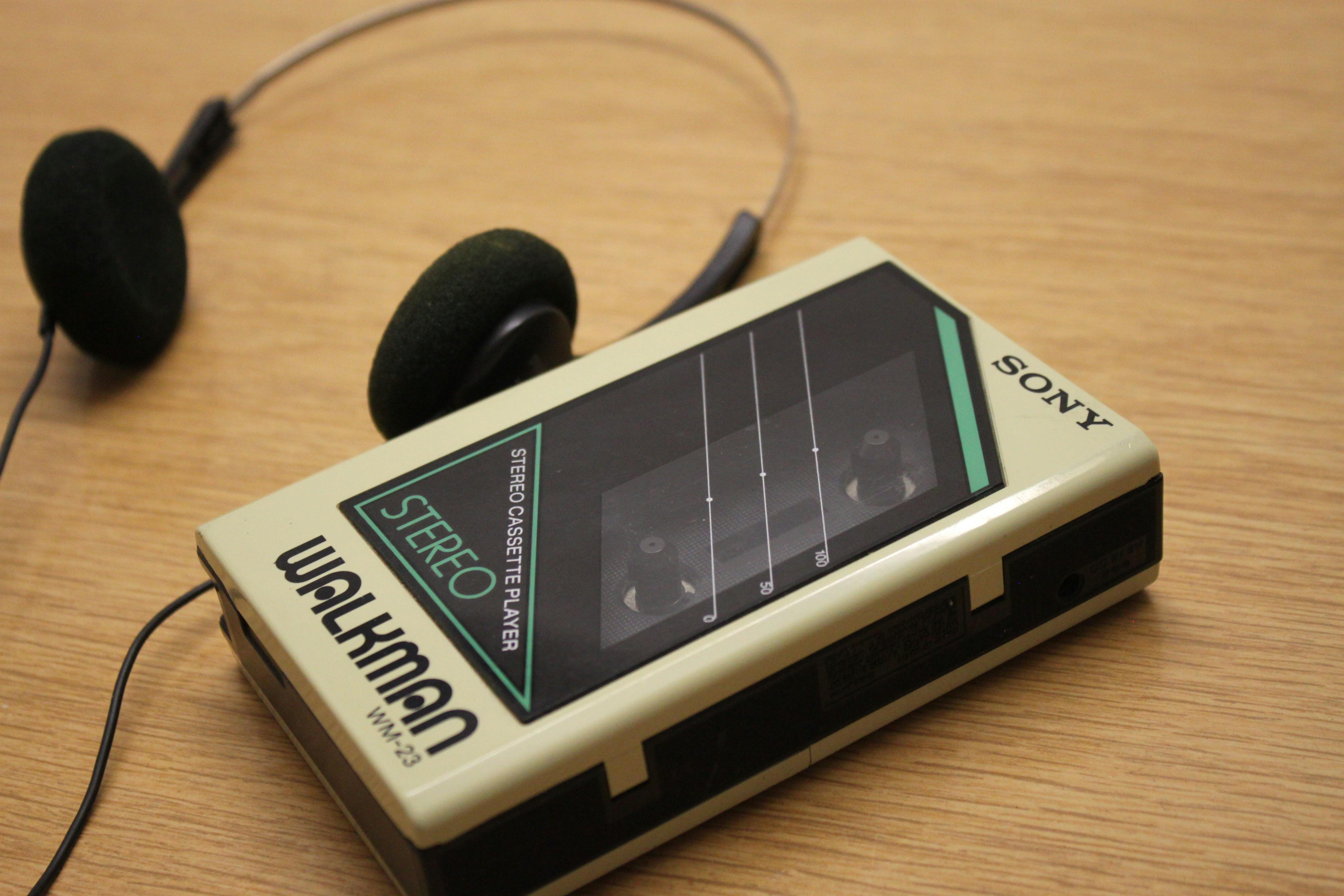
The Walkman did not make people want music
The Walkman (1979) did something more specific.
The stable aspiration was simple enough: help me have music with me.
That aspiration is not remotely new. People had already hired radios, home stereo systems, car audio, portable recorders using dry cells, and shared listening environments to make progress on it. But those solutions came with limits. They were tied to rooms, cars, groups, fixed locations, or devices that were not designed around movement and personal control.
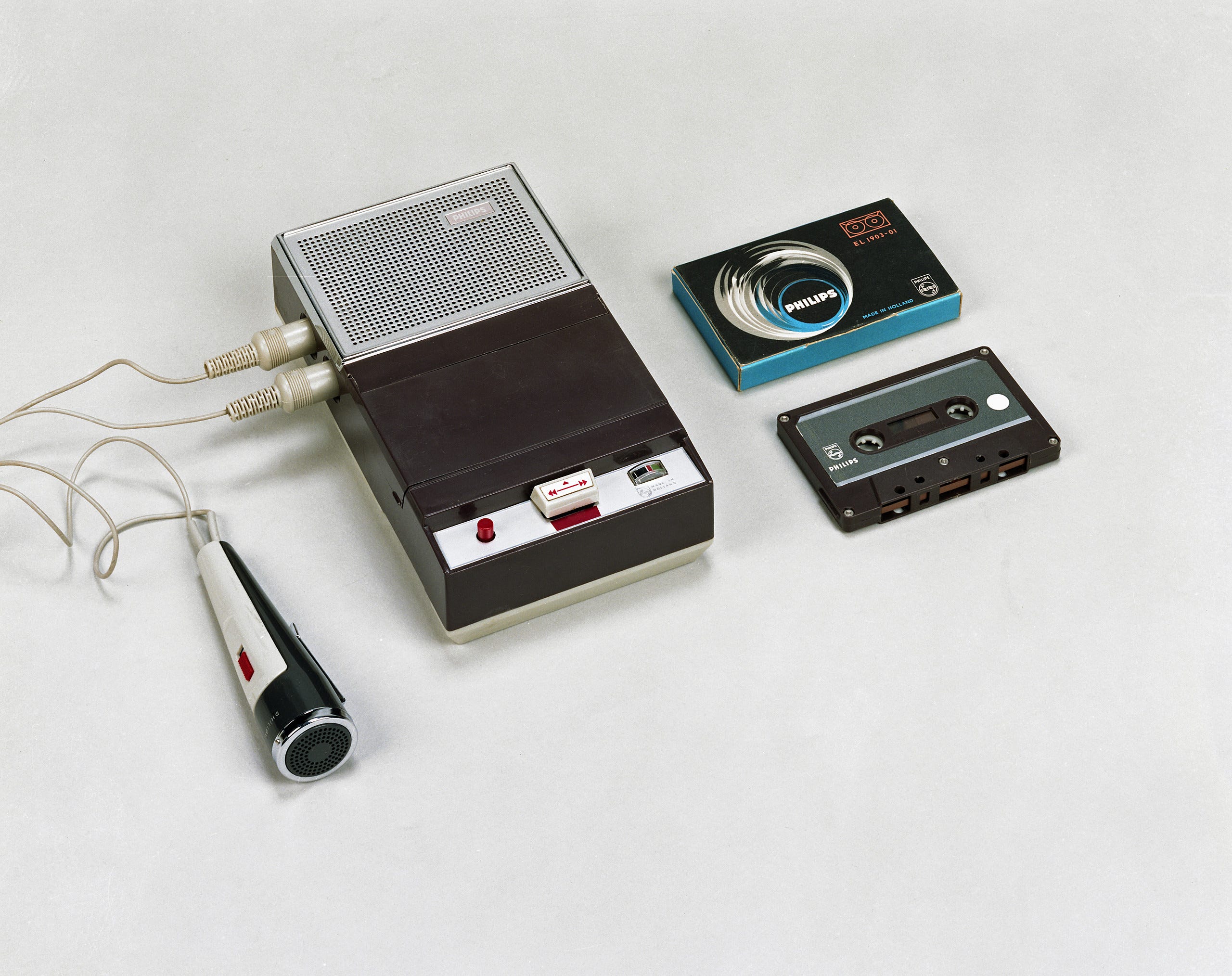
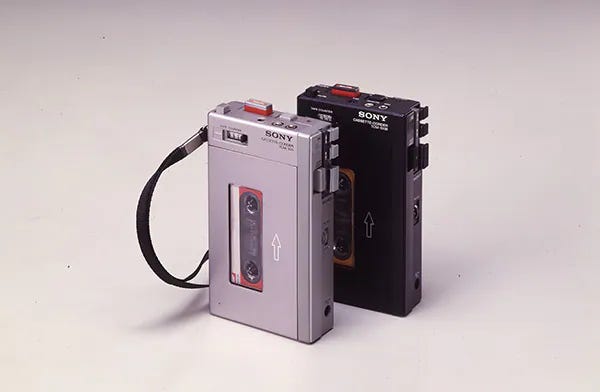
The Walkman collapsed that friction.
The real job was not merely “play music outside the home.” That is too shallow and too technical. The more interesting job was closer to this:
Help me create a private listening world that I can carry through public life.
That is different.
It points to something products people remember fondly usually do well. They do not just improve utility. They reorganize experience.
The Walkman let people move through a city, a commute, a corridor, a train station, a park, a waiting period, and remain accompanied by chosen sound rather than surrendered to ambient noise or silence. It changed what happened in the in-between moments of life.
That unlocked several layers of progress at once.
Functionally, it made music portable enough, light enough, and controlled enough to fit into movement rather than interrupt it.
Emotionally, it gave people mood regulation, solitude without isolation, rhythm for boredom, and a sense of personal control inside environments they did not control.
Socially, it made private media consumption in public not only possible but legible. It let people signal taste, modernity, autonomy, and selective withdrawal without leaving the crowd.
That is why the Walkman mattered more than a smaller tape machine should have mattered.
It did not just mobilize music. It privatized it, individualized it, and attached it to transit, waiting, and everyday motion. It turned dead time into inhabited time.
That is a larger market than “portable audio.”
It is a market for self-directed atmosphere.
The iPhone did not make people want computing
The iPhone reveals the same pattern at a larger scale.
Again, the higher-order aspiration was old. People already wanted to communicate while mobile. They wanted access to information when away from desks. They wanted to capture moments, navigate unfamiliar places, coordinate with others, carry contacts, check messages, browse, and act without delay.
Before the iPhone, they hired separate tools to get parts of that done. Mobile phones handled voice and texts. BlackBerry handled email and status. PDAs handled calendars and contacts. Laptops handled real computing. Cameras handled photography. iPods handled portable media. Maps, memory, and paper filled the gaps.
This arrangement worked, but badly. Or more precisely, it worked in a fragmented way.
The iPhone did not create a new desire called “mobile digital life.” It collapsed several half-solved jobs into one continuously available environment.
The more accurate job statement is something like this:
Help me carry an always-available personal digital environment so I can act, respond, access, coordinate, and express myself in the moment.
That goes beyond “phone” and beyond “computer.”
The breakthrough was not mobility alone. Laptops were mobile in a narrow sense. Phones were mobile too. The breakthrough was continuous readiness. The device was with you, personal, switched on, touchable, connected, and capable enough to reduce the cost of acting now instead of later.
That changed the structure of everyday life.
Functionally, it collapsed tools and reduced switching costs. One object handled communication, search, navigation, media, photography, coordination, and software-based extensions.
Emotionally, it reduced the anxiety of being cut off, unprepared, uninformed, or forced to wait. It created a new baseline of felt capability.
Socially, it transformed expectations around reachability, responsiveness, visibility, identity, and participation. It did not just let people communicate. It made continuous digital presence normal.
Again, the market expansion did not come from inventing the aspiration. It came from making the aspiration executable at much higher frequency across much more of the day.
What both products really did
The Walkman and the iPhone both converted a formerly episodic job into a continuous one.
That may be the core insight.
Before the Walkman, music on the move was limited, shared, situational, or clumsy. After the Walkman, music could become a persistent layer of daily life.
Before the iPhone, digital action away from fixed infrastructure was fragmented and often deferred. After the iPhone, digital action became ambient, immediate, and expected.
That is where the market came from.
Not from the birth of a new desire, but from the expansion of moments in which an old desire could be satisfied.
This is easy to miss because product history is often written from the perspective of the object rather than the user.
From the object’s perspective, the product looks new.
From the user’s perspective, the progress sought is often familiar.
That is why so many companies misread what a breakthrough is.
They keep searching for unprecedented desires instead of examining where people already want progress but still face too much friction, fragmentation, exposure, delay, dependence, or social awkwardness to get it easily.
The strategic question is not, “What entirely new thing can we make?”
The better question is, “Which existing aspiration is still under-served because the current ways of getting the job done remain too constrained?”
That is a very different search field.
The real expansion mechanism is not novelty, but newly allowed behavior
If you strip away the product mythology, both cases become less mystical and more instructive.
The Walkman expanded the market by making music portable, private, and compatible with movement.
The iPhone expanded the market by making digital capability portable, immediate, and compatible with constant context-switching.
In both cases, the product enlarged the market because it improved several dimensions of the job at once:
It increased availability.
It increased frequency.
It reduced setup cost.
It reduced interruption.
It improved privacy or personal control.
It made use in public more normal.
It bundled previously separate sub-jobs into one hire.
That is why these products did not merely take share. They changed the size and shape of the category.
This is where a lot of product strategy still goes wrong.
Teams often ask whether their product is sufficiently novel. They obsess over differentiation at the level of features, patents, or technical claims. Then they miss the more consequential issue: whether the product changes the conditions under which an existing job can be performed.
A product can be technically new and commercially thin.
A product can be technically derivative and commercially explosive.
The difference is often not invention. It is job fit under changed conditions.
This should change how we talk about innovation
The popular language of innovation still overweights originality at the level of the part and underweights coherence at the level of the system.
That bias distorts how companies search for growth.
It pushes them toward technology theater, toward the hunt for something that looks impressively new in a demo but does not change much in lived behavior. It also makes them underrate recombination, redesign, portability, distribution, interface, and the removal of friction, which is unfortunate because that is where a great deal of commercial value actually appears.
Most important products do not win because they contain something nobody has ever seen before.
They win because they make it newly practical to become who the user already wanted to be.
The Walkman let people become someone who carried a private soundtrack through public life.
The iPhone let people become someone who remained digitally capable, reachable, informed, and expressive across almost all contexts.
These identities were not invented out of thin air. But the products made them routine.
That is the step product teams should pay more attention to.
Not whether a capability exists in principle.
Whether it is now coherent enough, cheap enough, small enough, acceptable enough, and integrated enough to become normal behavior.
The implication for product teams
If this view is right, then a lot of teams are searching in the wrong place.
They ask what new technology they can add. They should ask which old aspiration has just become executable because several constraints have shifted at once.
They ask what feature will differentiate them. They should ask which bundle of sub-jobs, emotional gains, and social permissions can now be solved together.
They ask whether the market exists. They should ask whether the market has been waiting for a form factor, interface, or architecture that finally lowers the cost of hiring the product.
That requires a different kind of observation.
Less fascination with the artifact.
More interest in the moments where people still patch together bad solutions.
More attention to dead time, transition time, awkward time, exposed time, interrupted time.
More respect for emotional and social progress, not just functional progress.
More willingness to see that enormous markets may sit inside jobs that sound ordinary.
Music while moving sounds ordinary.
Being digitally capable while away from the desk sounds ordinary.
That did not stop those jobs from generating category-defining products once the conditions changed.
The lesson is not that invention does not matter
It does.
But market-shaping products are often less about inventing a completely new desire than about recognizing when an old desire can finally be served in a way that changes behavior.
That is a subtler skill than invention. It requires timing, synthesis, restraint, and a sharper understanding of the user’s life than most companies have.
The question is not whether the parts are new.
The question is whether the arrangement changes what the user can now do, feel, and signal across the flow of everyday life.
That is what the Walkman did.
That is what the iPhone did.
Big markets often do not begin with new desires.
They begin when old desires become portable, private, continuous, and socially normal.